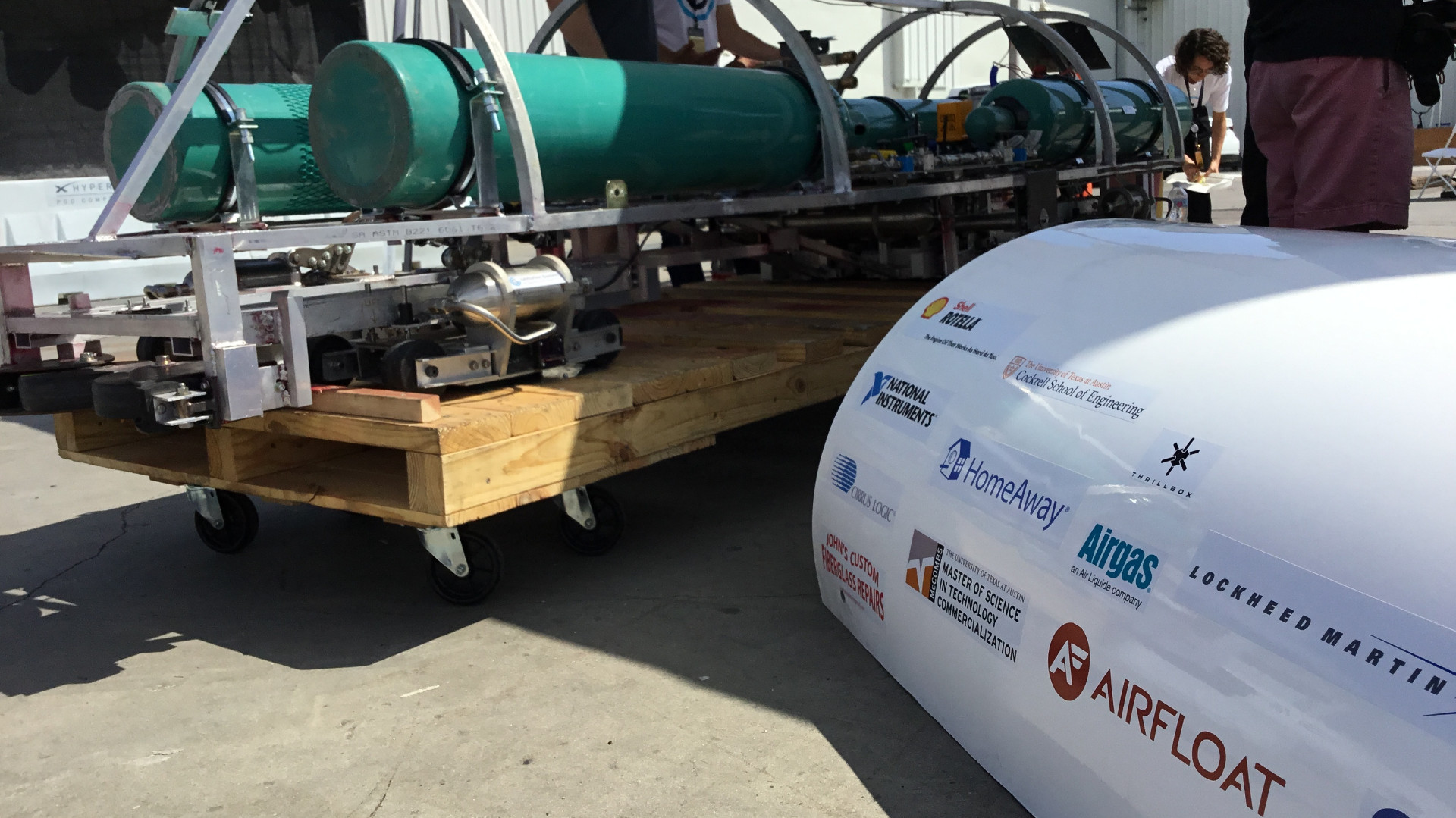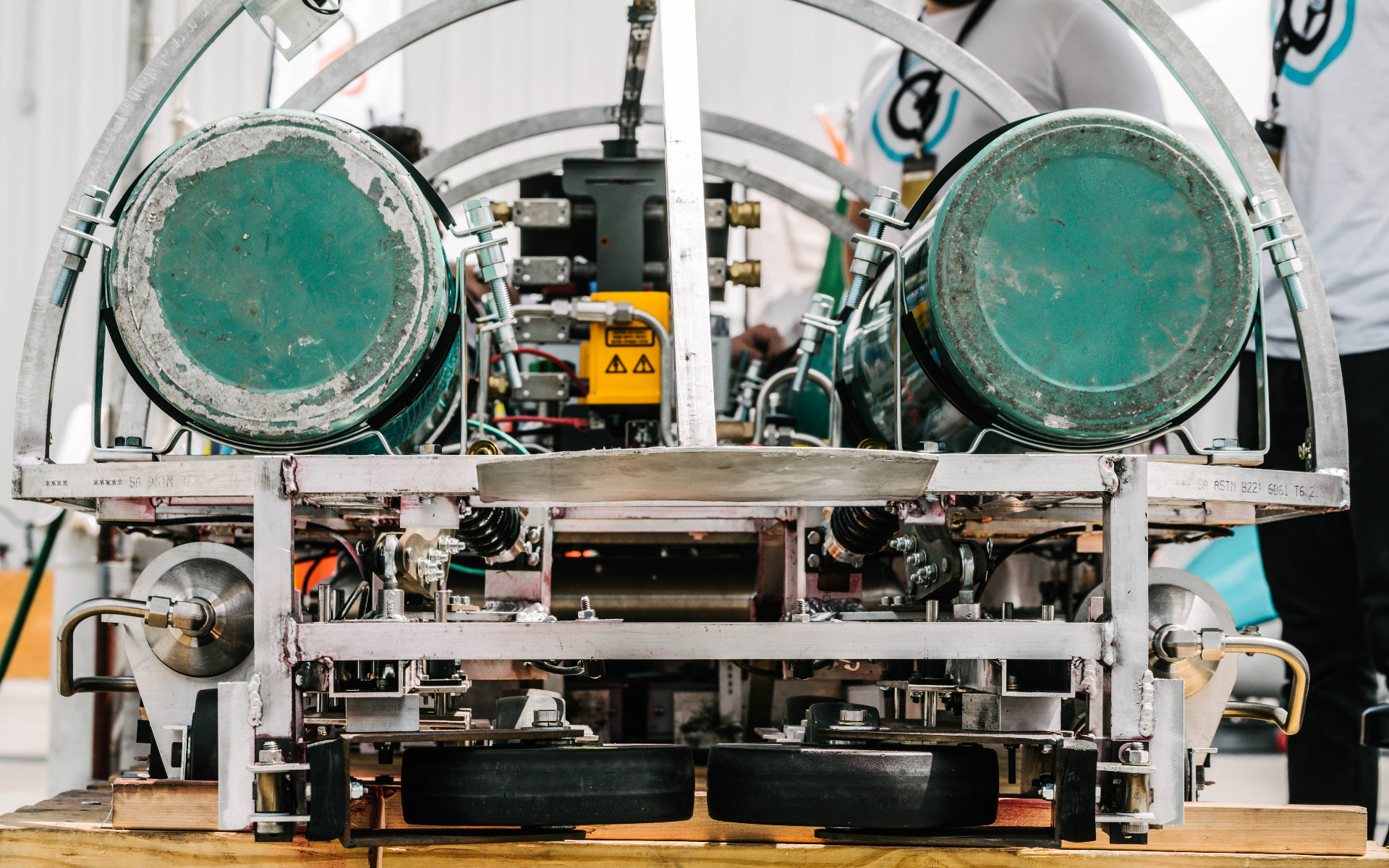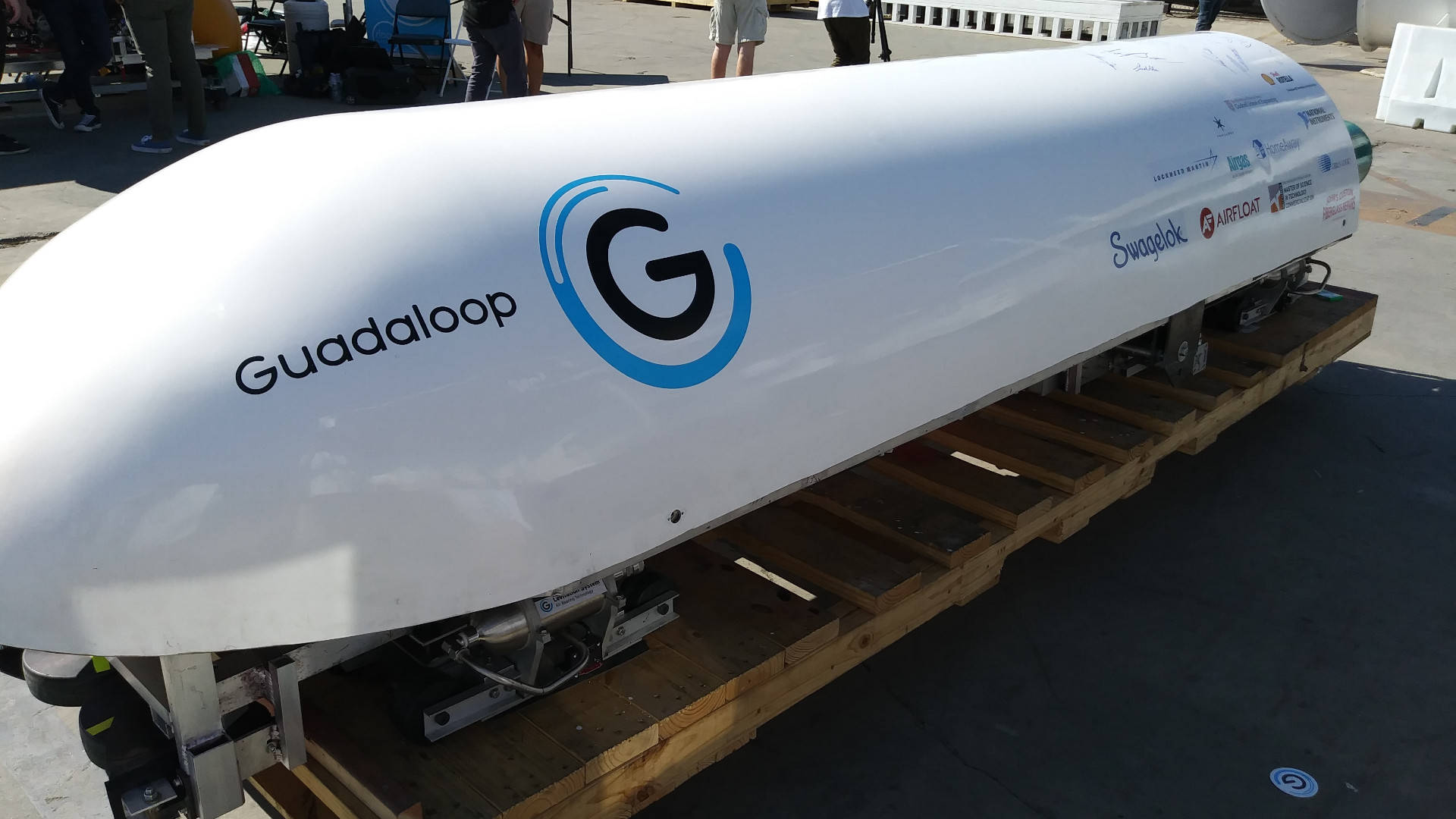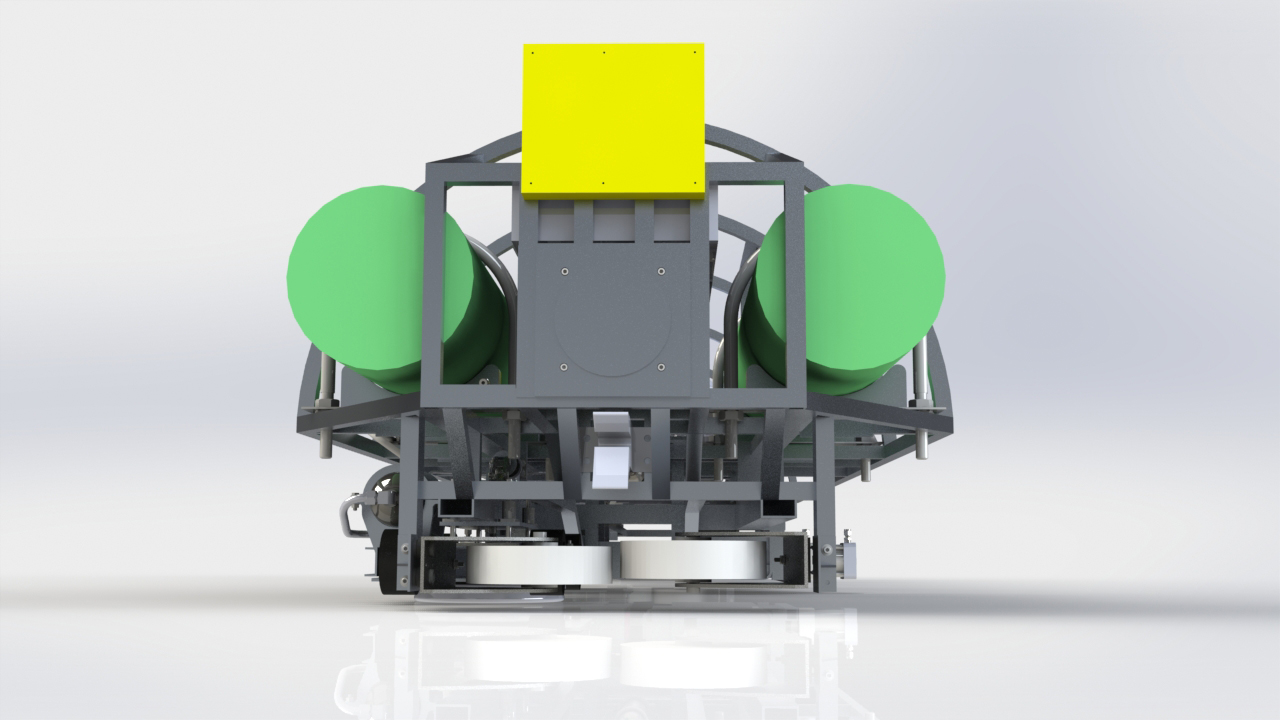
I participated in the SpaceX Hyperloop Competition II with the team Texas Guadaloop. The mission statement: design a full sized pod that could rocket down a vacuum tube at over 600 mph. Most custom parts were designed and manufactured in-house, so I gained a lot of experience in SOLIDWORKS and on the mill and lathe.
Machining and assembly was my primary task when I first joined. After I took more design classes I could help out with the modelling as well. I worked closely with the lead design engineer and other senior members to design products that were simple to machine and assemble. During the final stages of suspension assembly, I discovered that the suspension was binding under uneven load and had to work against the clock in an redesign process. We worked within the confines of the current model and designed a replacement suspension system using shocks, using the SOLIDWORKS FEA to confirm frame integrity. Stock was cut, tacked, and welded into place. Pod was tested under uneven load and performed to spec, then quickly loaded into the trailer and displayed in our first public reveal.
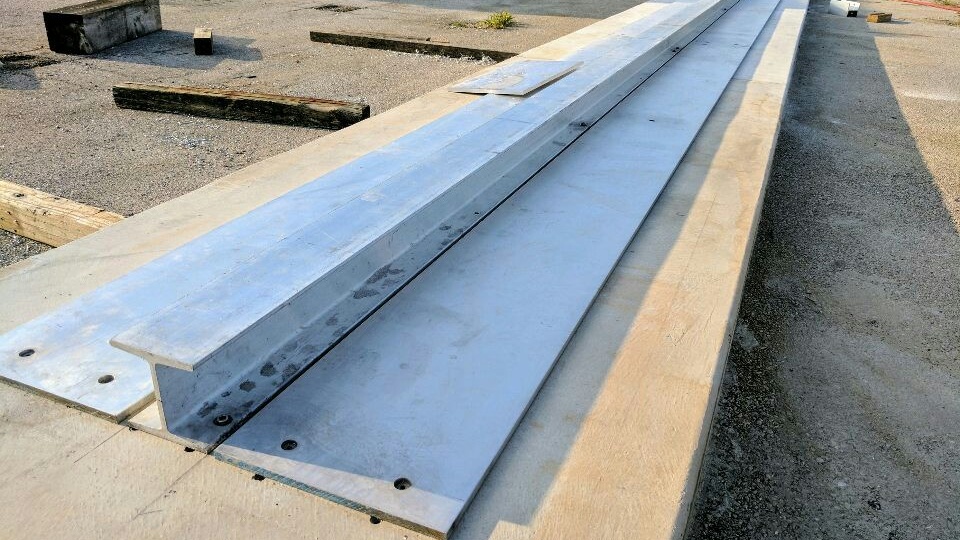
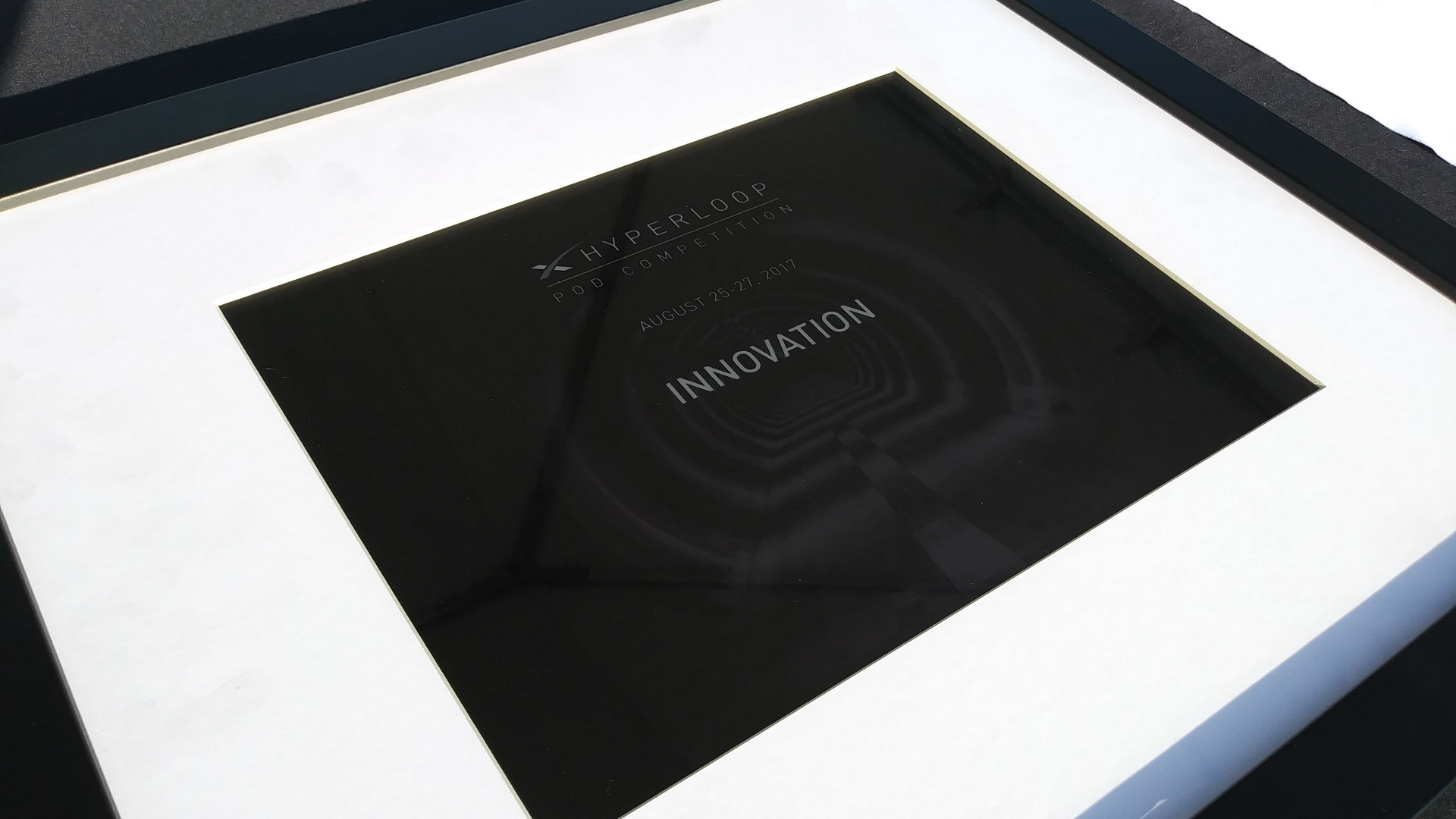
After the reveal, we packed the pod and headed to SpaceX headquarters in LA, where the competition was hosted. The entire week was a gauntlet of safety testing and approvals, being grilled by veteran SpaceX engineers poking about at every last detail. Whatever issues they found had to be remedied before we could put the pod on track, and we worked multiple nights trying to tie everything together. I would swap between repairing magnetic brakes at an auto shop to conducting FEA/CFD analysis at the Airbnb to bending and swageing pneumatic pipes on the competition lot. After the brutal fight through the safety and communication checks, we finally got the OK to run our pod on the track. In the end, although we didnt manage to get the fastest time (team from TUM achieved 200mph!), we did earn an Innovation Award for our use of air levitation while everyone else was using magnetic levitation.